Claudia F.
There's a particular kind of restaurant that stops feeling like a shared public space and more like a home. You sit down, the noise settles around you, and something releases — the sigh of relief as you sink into the leather banquette, the murmur of voices dissolving into the jazz drifting through the room. Bills in Double Bay has the feeling of home. I've been trying to understand why.
It isn't only due to the family-friendly menu, though the ricotta hotcakes have a loyal following for good reason. It's something that happens before the menu arrives — in the first thirty seconds of stepping through the thick glass doors and into the space.
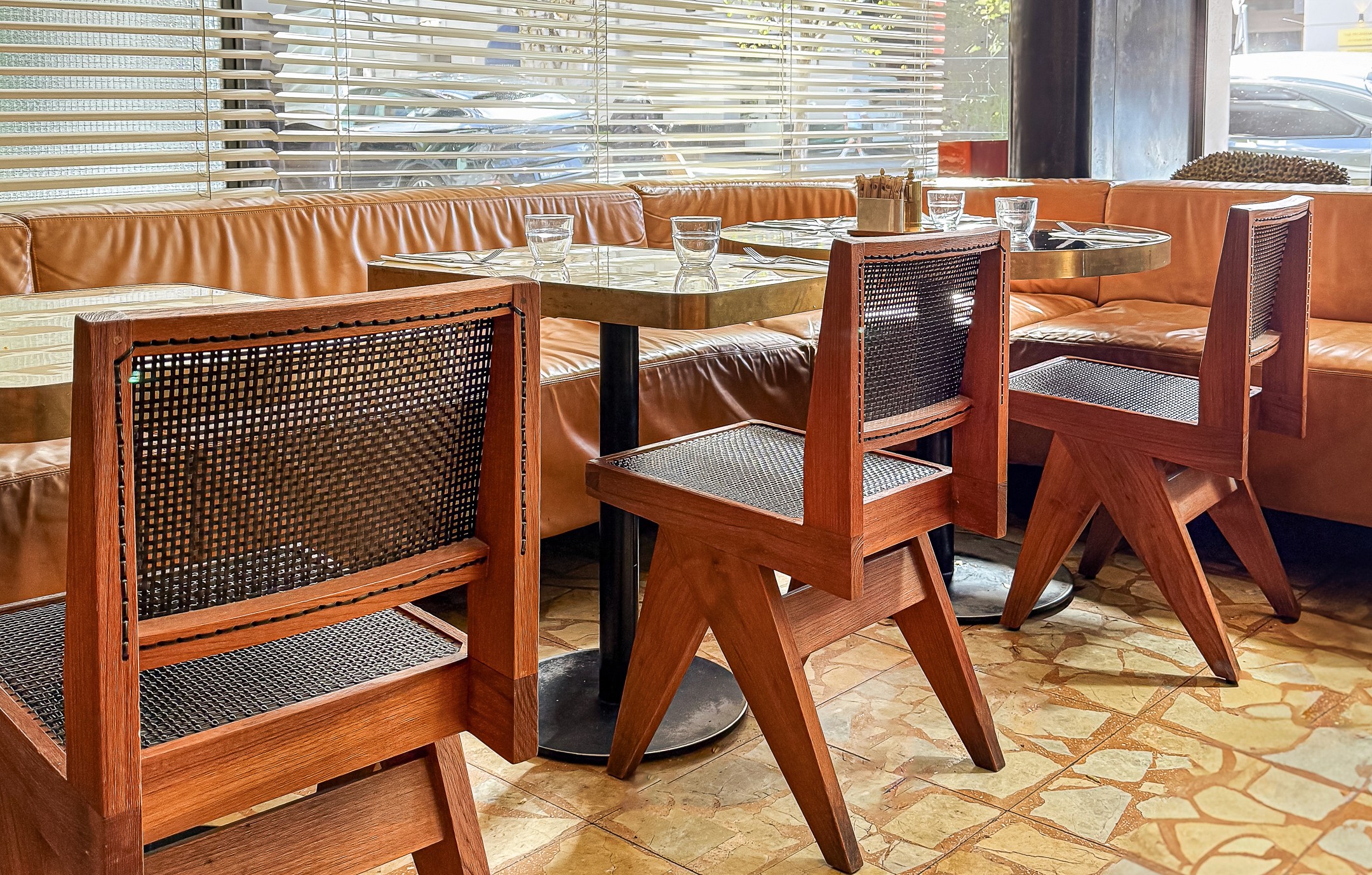
The restaurant is around 200 square metres. On paper, modest. In practice, it would make anyone feel aspirational about the home they'd one-day like to live in. Banquette seating runs along the walls in tan leather — a quietly intelligent decision. It creates intimacy without sacrificing capacity, makes a group of six feel as considered as a table of two, and ages better than almost anything else you could specify in a hospitality space. The best design decisions are the ones nobody consciously notices. This is one of them.
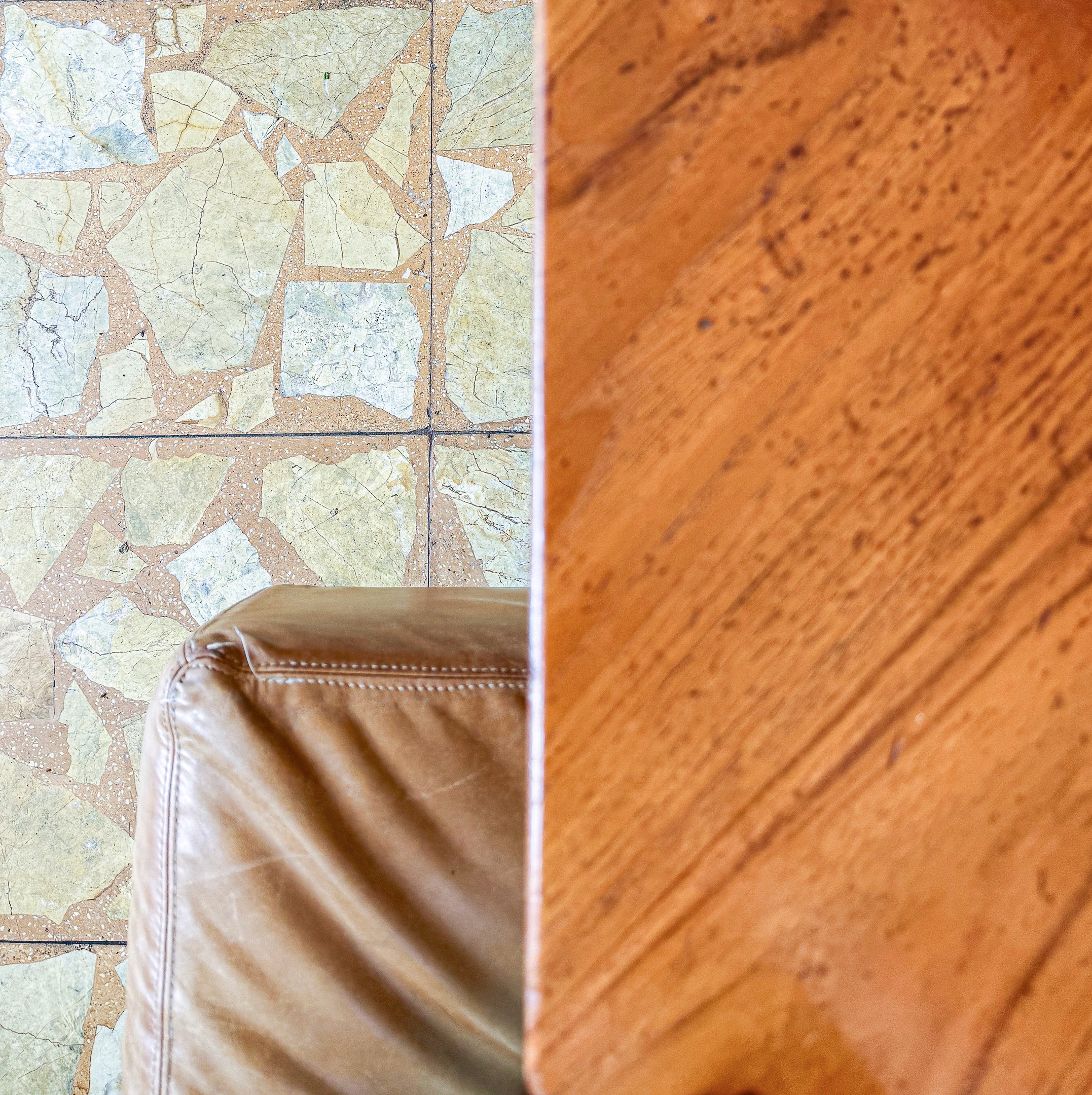
The floor is another feature worth admiring. Large terrazzo tiles in muted grey and tan, no two adjacent tiles the same. Against the darker warmth of the leather upholstery and the brass-bound hardwood tabletops, the floor provides the stable base that holds the whole material conversation together without trying to win it.
The acoustic ceiling is the most understated yet striking feature — of the slightest salmon pink and a slightly glossy texture, perforated, insulated, then rendered over to disappear into the walls. This is a restaurant whose design has considered all five senses.
Most fit-outs treat acoustics as someone else's problem. Here it was designed out invisibly, without credit, which is exactly how good design tends to work.
It's a little known fact that Bill Granger studied interior design at RMIT briefly before making his mark in hospitality. That education is visible here — not as a portfolio exercise, but as a set of values applied quietly. Warmth as a technical outcome, not a styling mood. Comfort engineered through the interiors, not merely gestured at.
The lighting fixtures punctuate the pale plaster walls with warmth without demanding attention. The rattan chair backs bring texture and a kind of unhurried character — handmade-feeling in a space that evokes the easy breeziness of a coastal home. Together, these layers — stone, timber, brass, leather, rattan — transform atmosphere from conceptual to tangible.
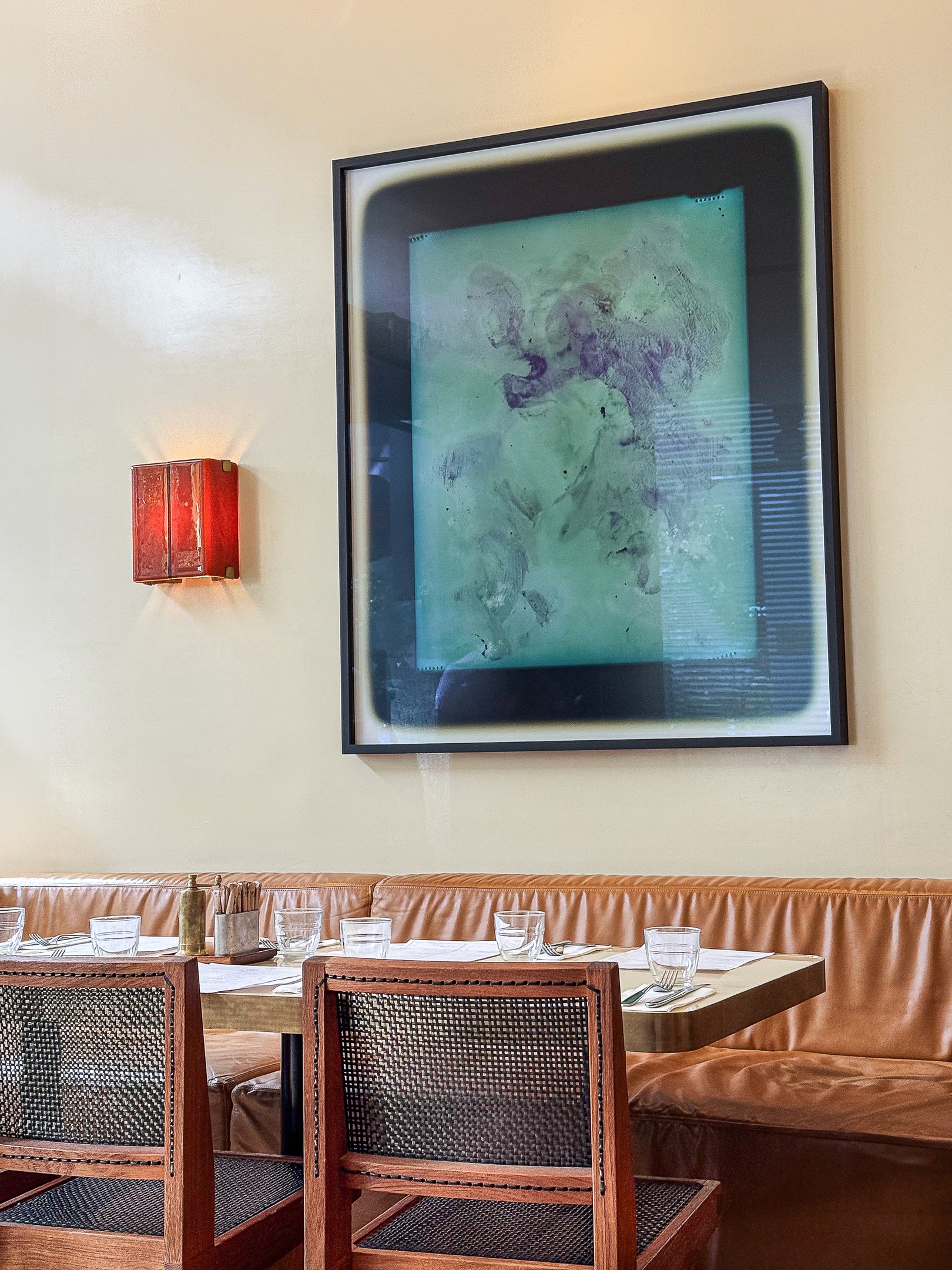
The fit-out is by Meacham Nockles McQualter — the same studio behind MECCA and Scanlan & Theodore. The throughline in their work is the same: spaces that feel inhabited rather than installed. Bills doesn't feel like it was designed. It feels like it grew from a strong set of underlying design principles — and those principles travel. Look at bills restaurants across the world — across Asia and the UK — and the same invisible thread runs through each one: a shared design language that holds its identity intact despite being rooted entirely in its own location. That is a rare thing to pull off. Interiors, it turns out, can carry a brand further than most people give them credit for.