Claudia F.
The first thing I noticed was the cool air. It was a hot, humid summer's day and every other house we had inspected had felt like walking into held breath — full of anticipation but eventually stale and slightly pressurised. Oakleigh was different. Its ceilings were high, the air moved evenly throughout the house, and the skylight threw clean light down into the dining space below. The bones were good. You could tell that someone had looked after this place.
Oakleigh is the house's original name, circa late 1920s. The original plot was Crown Land — granted to the Fitzroy Iron Works Company for iron ore mining — and over the decades that followed, the land was subdivided and passed through several hands before becoming the house it is today. James Dawson, one of its early owners, went on to become Chief Inspector of Schools for the Department of Education. The Bunter family, who held it for a period, were prominent figures in the region. These weren't facts I'd expected to find, but they changed what I wanted to achieve with the renovation. The purpose shifted from improvement to preservation. Not preservation as stasis, but as careful continuation of something that had already mattered to people.
Whole lives had been lived here. This deserved to be respected and acknowledged.
The weekly trips to the Southern Highlands have become an unanticipated source of joy. There's a particular kind of clarity that comes with being outside the city. The city symbolises ambition, while the countryside grounds its execution.
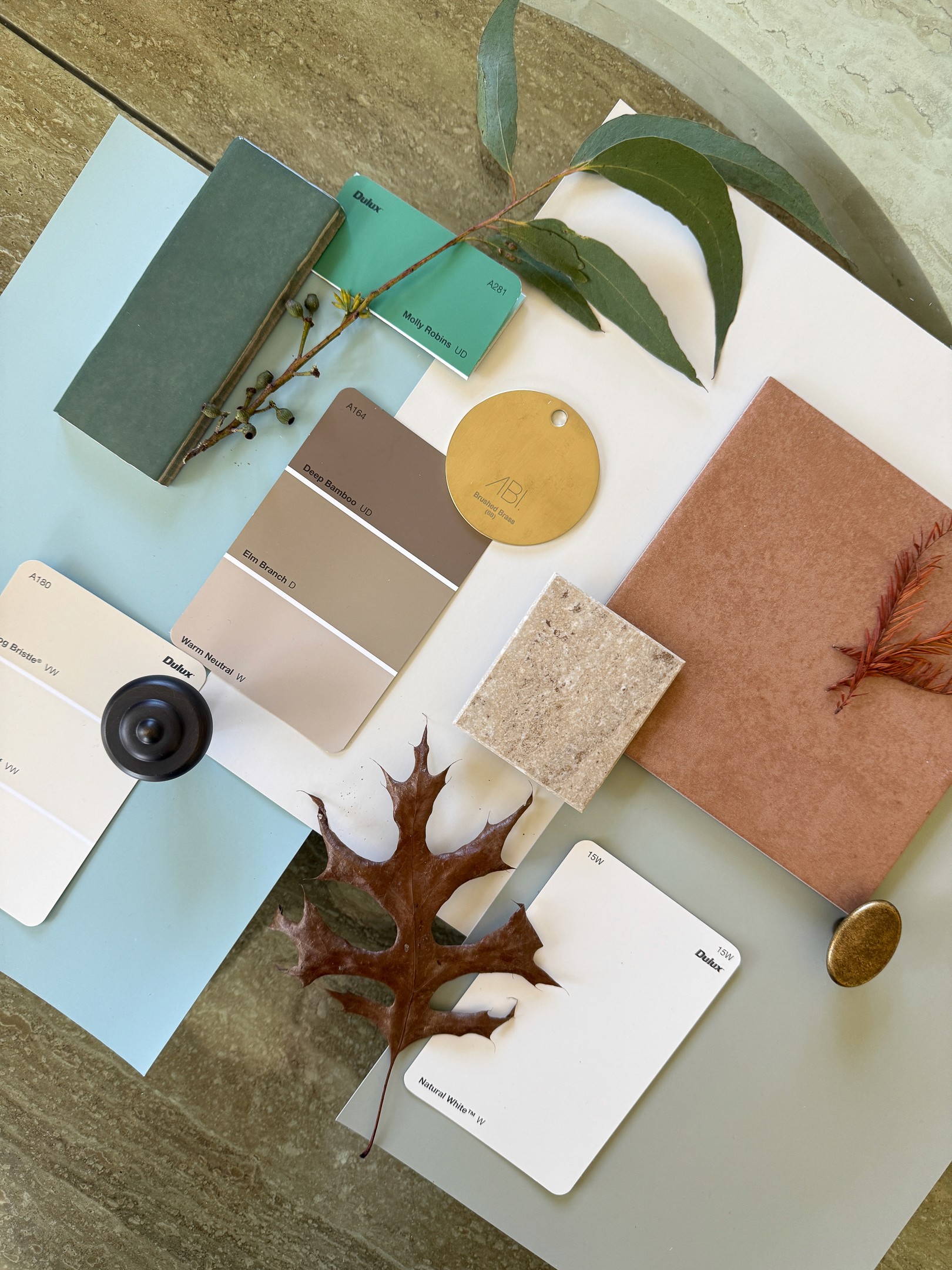
The palette for Oakleigh didn't come from a moodboard or a trend — it came from specific recurring scenarios. Crisp autumn leaves with their bright reds, terracottas, and browns illuminating against pale and dark forest greens. The nearby lake catching the sun on clear days, its surface reflecting a particular sky blue and turning grey and moorish as afternoon rain sets in. Freight trains echoing past in the middle of the night. Stepping off the train and smelling mulch in the air — cold and unmistakably country. These sensory impressions are woven into the memory of the place. The palette became an attempt to transfer these experiences into the interiors.
I knew that the spaces within Oakleigh needed to flow seamlessly into one another, leading to experimentation with colour to delineate between private and communal spaces. Bedrooms in warm, settled neutrals that promoted quiet and rest. The hallway and mudroom in a transitional beige with green undertones, a threshold colour that grounds without announcing itself. The living and kitchen anchored to the landscape outside: the blue-green of water complimented by a backdrop of rolling mountains.
Green became the running thread throughout the house — a tonal connection to the surrounding mountains, present in almost every room but shifting in shade and register within each space. The kitchen took the longest to resolve. Repainting the joinery green was an obvious move but, upon reflection, the wrong one. The decision for green shifted to the walls instead — deep and moody, sitting comfortably next to the antique brass hardware already decided upon.
What the overall palette became, room by room, was a system with its own logic. Each colour working to balance, contrast, and harmonise its neighbours. Not a collection of individual decisions but a single argument for how Oakleigh — with its rich history and location — should feel.
For now, the concept is set. What comes next is the renovation itself — organising trades, managing timelines, closing the gap between the plan and what actually happens once you start pulling things apart. Conceptualisation moving into execution. Intention, becoming realised.
That's where the fun begins.